

How to Separate Personal and Business Money as a Nigerian Entrepreneur
- Why do entrepreneurs mix personal and business funds
From another angle, most entrepreneurs mix personal and business money because they often start their business with their personal savings.
Whether they lack the knowledge or started with personal finance, when money starts coming in, there is a likelihood to be tempted to start using business profit for personal expenses such as food, house rent, transportation, and family needs.
This habit, over time, can create confusion, making it harder to track profits, manage cash flow, and make informed business decisions.
Mixing personal and business finances can lead to several challenges for entrepreneurs.
It often results in poor cash flow management because it's difficult to know how much money is truly available for business operations.
It can also cause inaccurate profit tracking, making it hard to determine whether the business is actually growing or simply funding personal expenses.
Over time, this lack of financial clarity can lead to business stagnation, as entrepreneurs struggle to make informed decisions, plan for growth, or reinvest in their ventures.
- Have Financial Boundaries

Creating clear financial boundaries is essential for building a sustainable business.
By separating personal and business money, entrepreneurs gain a clearer picture of their financial health, improve budgeting, and make smarter decisions that support long-term growth and profitability.In this blog article we would explore ways to separate personal and business money.
- 1. Open a Dedicated Business Bank Account

Using one account for both personal and business transactions makes it difficult to track where money is coming from and where it is being spent.
Business income can easily be mistaken for personal funds, leading to inaccurate records, poor budgeting, cash flow problems, and difficulty measuring the true profitability of business.A separate business account helps you track income and expenses accurately, manage cash flow effectively, maintain organized financial records, build business credibility, and make informed decisions for sustainable growth.
Make it a habit to receive payments and pay business expenses exclusively through your business account for better control.
- 2. Pay Yourself a Fixed Salary or Allowance

One of the best ways to separate personal and business finances is to avoid withdrawing money from your business whenever a personal need arises.
Instead, decide on a fixed monthly amount to cover your personal expenses and pay yourself consistently.
By treating yourself as an employee of the business, you create a clear boundary between business funds and personal spending.
This approach makes budgeting easier because you know exactly how much money is available for both personal and business needs.
It also leads to more predictable cash flow and reduces the temptation to overspend or dip into business funds unnecessarily.
- 3. Keep Separate Records for Business and Personal Expenses
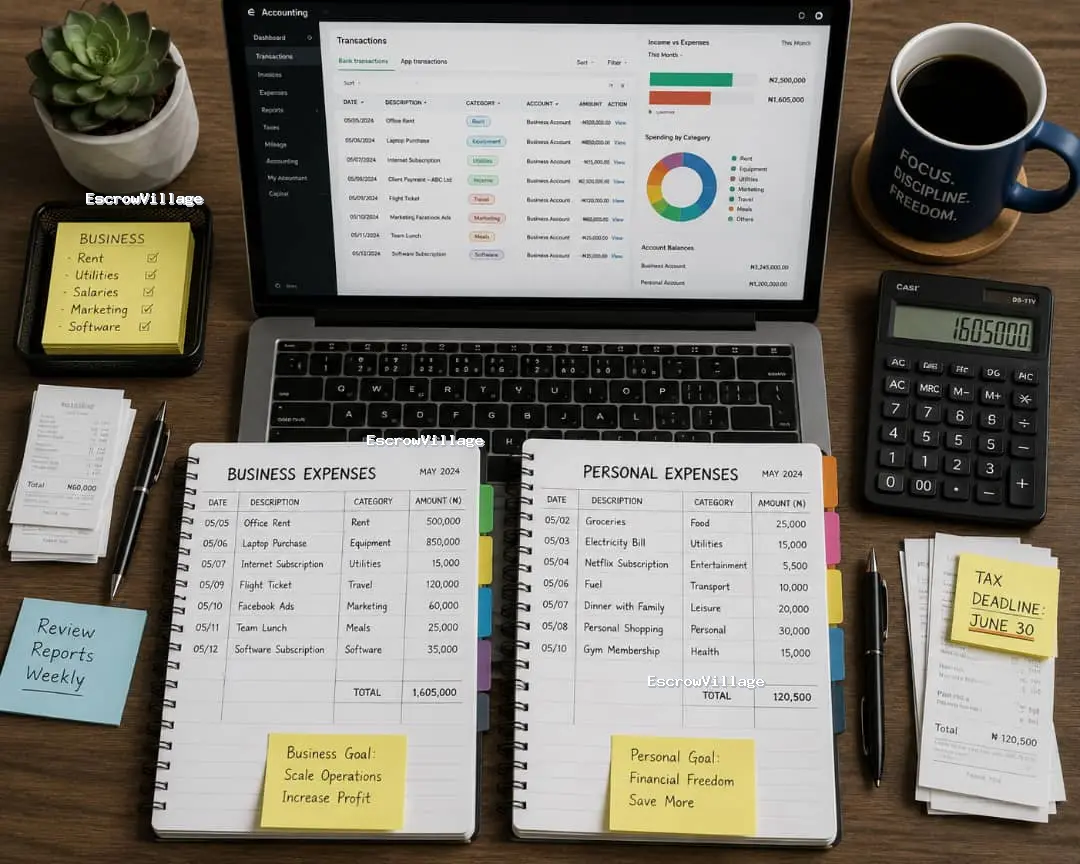
Keeping accurate records of every business income and expense is essential for financial clarity.
You can use spreadsheets, accounting software, or bookkeeping apps to monitor transactions consistently.
Business expenses such as inventory purchases, advertising costs, and delivery fees should be recorded separately from personal expenses like rent, groceries, and entertainment.
Maintaining proper records helps you understand how your business is performing and identify areas where costs can be reduced.
It also makes tax filing easier by providing organized financial information when needed.
Additionally, accurate records support better business planning, allowing you to make informed decisions and set realistic growth goals.
- 4. Create a Business Budget

A business budget gives every naira a purpose before it is spent. Income should be allocated to daily operations such as inventory, salaries, rent, and utilities.
A dedicated marketing budget supports advertising, customer acquisition, and brand awareness. Emergency reserves provide a safety net for unexpected expenses or slow sales periods.Growth funds can be invested in new products, equipment, staff training, or business expansion.
By separating income into these categories, business owners avoid unnecessary withdrawals and impulse spending.
Budgeting improves financial discipline, protects cash flow, ensures business stability, and creates a clear path toward long-term profitability and sustainable growth.
- 5. Use Escrow and Business Payment Channels

Keeping customer payments separate from personal accounts is a key business practice that improves financial management and professionalism.
Using trusted business payment solutions and escrow services helps ensure that transactions are secure, transparent, and easy to monitor.
Separate accounts make it easier to track income, reconcile records, and prepare accurate financial reports.
Customers are more likely to trust businesses that use recognized payment systems, which can improve credibility and encourage repeat purchases.
Clear payment processes also reduce disputes, misunderstandings, and payment confusion.
Overall, separating business funds from personal finances supports accountability, strengthens customer confidence, and promotes smoother business operations.
- The Right Process

Separating personal and business finances is essential for building a sustainable and successful business.
It provides a clear picture of income, expenses, and overall profitability, making it easier to make informed financial decisions.Maintaining separate accounts improves record-keeping, simplifies budgeting, and reduces the risk of financial confusion.
Financial discipline helps entrepreneurs accurately measure business performance, identify growth opportunities, and plan for expansion with confidence.
As a business grows, strong financial management becomes even more important for long-term stability and success.
Start today by opening a business account and tracking your finances more intentionally to build a stronger foundation for growth.
The sooner you separate your personal and business money, the easier it becomes to grow a profitable and sustainable business.