
7 Reasons Why Small Businesses Need to Be Registered in Nigeria
Starting a small business in Nigeria is an exciting step, but building a successful business involves more than selling products or providing services.
Business owners also need to take steps to protect their businesses, earn customers' trust, and create opportunities for growth.
One important step is registering the business.
Registering a small business in Nigeria helps business owners establish legal recognition, build credibility with customers, access certain funding opportunities, open a dedicated business bank account, and qualify for corporate contracts.
It also helps them meet applicable legal and regulatory requirements while preparing the business for future growth.
Although some entrepreneurs start by selling through WhatsApp, Instagram, or a physical shop without registering their businesses, formal registration can make it easier to access opportunities that may not be available to unregistered businesses.
Whether you are starting a small retail shop, an online store, a fashion business, or a service-based business, understanding business registration can help you make informed decisions about your business.
In this article, we will explain what business registration means in Nigeria, the different forms of business registration, seven reasons why small businesses need to be registered.
Business registration in Nigeria is the process of officially registering a business with the appropriate government authority to establish its legal status and record its existence.
The primary agency responsible for business registration in Nigeria is the Corporate Affairs Commission (CAC).
The commission registers business names, companies, and certain other legal entities in accordance with applicable laws.
Business registration provides official records of a business's name and registration details.
Depending on the type of business registered, it can also establish a separate legal entity with rights and responsibilities distinct from those of its owners.
For example, someone who sells clothes on Instagram may decide to register the business name under which they operate.
This gives the business an official record and can help the owner establish a more professional presence.
However, registering a business does not automatically provide every licence, permit, or approval that the business may need.
Depending on the industry, the owner may need to complete additional registrations or obtain relevant permits.
Before registering a business, it is important to understand the available options and choose one that suits your business activities and long-term plans.
The main options include the following.
A business name is a common option for individuals who operate small businesses, including retail shops, online stores, fashion businesses, and other small enterprises.
For example, a fashion entrepreneur may register a name such as Blessed Styles to operate their clothing business.
This option is generally simpler and less expensive than incorporating a company.
However, a registered business name does not create a separate legal entity, meaning the owner generally remains personally responsible for the business's debts and obligations.
A private limited liability company is a separate legal entity from its owners. It is often suitable for businesses that want to expand, bring in investors, employ staff, or enter into larger commercial agreements.
For example, an entrepreneur who wants to build a nationwide e-commerce company may choose to incorporate a private limited liability company.
The company's structure generally helps separate its liabilities from those of its shareholders, although exceptions can apply.
A public limited company is a corporate structure that may be appropriate for larger businesses seeking to raise capital from the public, subject to applicable legal and regulatory requirements.
This structure is generally not necessary for someone who is just starting a small business.
Which option should you choose?
The right option depends on your business goals, ownership structure, financial plans, and legal obligations.
A small business owner who wants to operate under a business name may begin with business name registration, while an entrepreneur building a company with plans for investment and expansion may consider incorporation.
Business registration is more than a formality. It can help small business owners establish credibility, access opportunities, and prepare for long-term growth.
Here are seven important reasons to register your small business in Nigeria.
One of the main reasons to register a small business is to establish its official identity.
When a business is registered with the CAC, its details are recorded in the commission's register. This makes it possible for customers, suppliers, and other interested parties to verify its registration status.
For example, imagine that you sell skincare products online. A potential customer wants to confirm that your business has an official identity before placing a large order.
Having a registered business name gives the customer an additional way to verify your business details and may make them more comfortable dealing with you.
However, business registration does not automatically prove that a business is trustworthy or that every product it sells is safe. Business owners must still operate honestly and comply with relevant laws.
Registration can also help business owners establish their rights and responsibilities when entering into commercial transactions.
Trust plays an important role in business, especially in Nigeria's online marketplace, where customers may worry about fake sellers, payment scams, and products that never arrive.
Registering your business can help demonstrate that you are serious about your work and willing to establish a formal business identity.
For instance, a customer choosing between two online vendors may feel more comfortable buying from a vendor whose business details can be verified.
A registered business can also appear more professional when communicating with customers, negotiating with suppliers, or presenting business proposals.
However, registration alone is not enough to build lasting trust. You must also deliver quality products, communicate clearly, honour agreements, and handle customer complaints properly.
When you combine business registration with honest business practices, you give customers more reasons to trust your brand.
Many entrepreneurs need additional capital to purchase inventory, acquire equipment, employ workers, or expand their operations.
However, accessing funding can be difficult when a business lacks the documents required by a lender or funding programme.
Registering your business can help you meet one of the eligibility requirements for certain business loans, grants, and other funding opportunities.
For example, a small business owner who wants to apply for a business development programme may be required to provide a CAC registration certificate alongside other documents.
Similarly, some lenders may request business registration details, financial records, bank statements, and evidence of business activity before considering a loan application.
It is important to understand that business registration does not guarantee access to loans, grants, or funding.
Each programme has its own eligibility criteria, and applicants may need to demonstrate financial stability, business viability, and the ability to repay borrowed money.
Nevertheless, registering your business can help you prepare for opportunities that require formal business documentation.
Separating business finances from personal finances is an important step towards managing a business effectively.
When business owners use their personal accounts for every transaction, it can become difficult to determine how much the business earns, how much it spends, and whether it is making a profit.
A dedicated business bank account can make financial management easier by keeping business income and expenses separate from personal transactions.
For example, if you operate an online store, you can use a dedicated business account to receive customer payments, pay suppliers, and manage other business expenses.
This arrangement can help you maintain clearer financial records and understand your business's financial position.
Depending on the bank and account type, business registration documents may be required to open a business account. Banks may also request identification, tax information, and other supporting documents.
The exact requirements vary, so it is important to confirm them with your preferred bank before applying.
Registering your business can help you qualify for commercial opportunities that require suppliers and service providers to have formal business documentation.
Some organisations prefer to work with registered businesses because it makes it easier to verify their identity, prepare contracts, maintain records, and complete procurement procedures.
For example, imagine that you run a small catering business and want to supply meals for a corporate event.
The organisation organising the event may require you to provide your CAC certificate, tax information, invoices, and other documents before awarding you the contract.
Without the required documentation, you may be unable to proceed, even if you have the experience and capacity to deliver the service.
Business registration can also help small businesses pursue partnerships with established companies, retailers, distributors, and other organisations.
However, registration alone does not guarantee that you will win a contract. You must still meet the client's requirements, demonstrate your ability to deliver, and offer competitive pricing.
By registering your business, you can put yourself in a better position to pursue opportunities that require formal business status.
Operating a business comes with legal responsibilities, and business registration can be an important part of meeting them.
Depending on the nature of your business, you may need to comply with tax obligations, obtain industry-specific permits, maintain certain records, or meet other regulatory requirements.
For example, a food business may need to meet relevant food safety and public health requirements in addition to registering its business.
Similarly, a business operating in a regulated industry may need approval from the relevant regulatory authority before providing certain products or services.
Registration also helps establish the business's official details, which can be useful when dealing with government agencies, banks, and other institutions.
It is important to note that the requirements for a business name and an incorporated company may differ. Tax obligations also depend on the applicable tax laws and the business's circumstances.
Business owners should therefore confirm the obligations that apply to their particular business rather than assuming that registering with the CAC completes every legal requirement.
Many entrepreneurs start small, but their long-term goals may include opening additional branches, employing workers, entering new markets, or supplying products to larger organisations.
Registering a business can help lay the foundation for these plans.
For example, someone who starts by selling shoes through WhatsApp may eventually want to open a physical store, launch a website, employ sales representatives, and supply products to other retailers.
Having a registered business can help the entrepreneur organise the business more formally and prepare the documentation that some of these opportunities require.
It can also support the development of clearer business processes, including financial record-keeping, contracts, and relationships with suppliers.
If the business later needs to bring in investors or change its ownership structure, the owner may need to consider a more suitable legal structure.
Business registration does not guarantee growth or success. A business still needs customers, effective management, good products or services, and sound financial decisions.
However, registering your business can help you build a more formal foundation for future expansion.
Registering a small business in Nigeria is an important step towards building a more formal and organised business.
It can help you establish legal recognition, earn customers' trust, qualify for certain funding opportunities, open a dedicated business bank account, pursue corporate contracts, meet applicable legal requirements, and prepare for future growth.
However, registration is only one part of running a successful business. You must also manage your finances properly, protect your customers, maintain good records, and build relationships based on trust.
For online businesses, another important consideration is how to protect payments when dealing with customers and suppliers.
Registering your business can help establish its identity, but it does not eliminate the risk of payment disputes, fake payment alerts, or dishonest buyers and suppliers.
This is where Escrow Village can help.
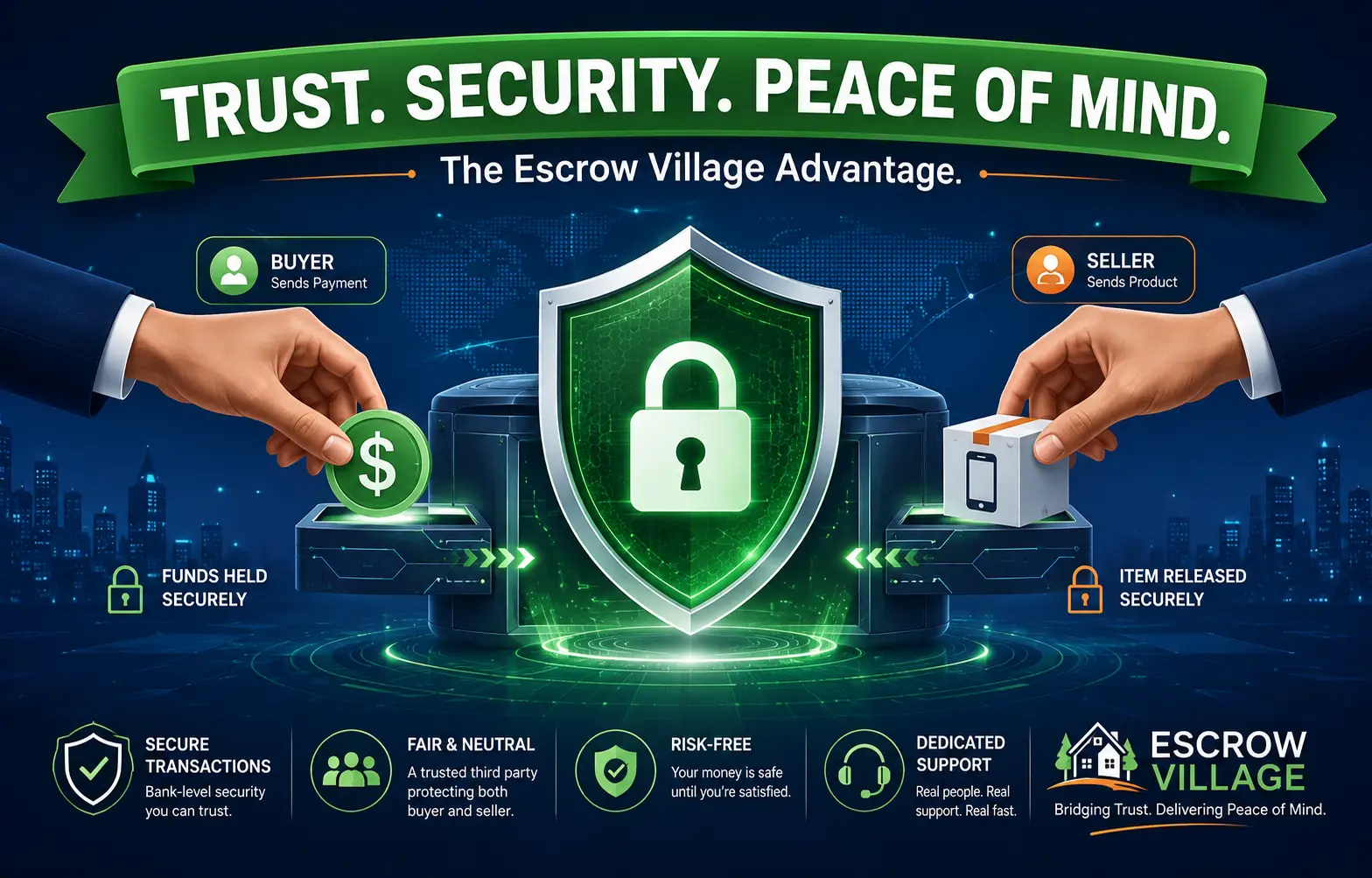
Escrow Village provides an escrow-based payment service designed to help buyers and sellers transact more securely.
Rather than having the buyer send money directly to a seller without additional protection, an escrow arrangement holds the funds until the agreed conditions for releasing the payment are met, subject to the platform's terms.
This can be particularly useful for small businesses that sell products online, work with new customers, or purchase goods from suppliers they have not dealt with before.
For example, if you run an online store and want to purchase inventory from a new supplier, using an appropriate escrow arrangement can help reduce the risk of losing your money if the transaction does not proceed as agreed.
Ready to build a more secure business? Visit Escrow Village to learn how escrow can help protect your business transactions and build greater confidence when buying and selling online.
Business owners also need to take steps to protect their businesses, earn customers' trust, and create opportunities for growth.
One important step is registering the business.
Registering a small business in Nigeria helps business owners establish legal recognition, build credibility with customers, access certain funding opportunities, open a dedicated business bank account, and qualify for corporate contracts.
It also helps them meet applicable legal and regulatory requirements while preparing the business for future growth.
Although some entrepreneurs start by selling through WhatsApp, Instagram, or a physical shop without registering their businesses, formal registration can make it easier to access opportunities that may not be available to unregistered businesses.
Whether you are starting a small retail shop, an online store, a fashion business, or a service-based business, understanding business registration can help you make informed decisions about your business.
In this article, we will explain what business registration means in Nigeria, the different forms of business registration, seven reasons why small businesses need to be registered.
- What Is Business Registration in Nigeria?
Business registration in Nigeria is the process of officially registering a business with the appropriate government authority to establish its legal status and record its existence.
The primary agency responsible for business registration in Nigeria is the Corporate Affairs Commission (CAC).
The commission registers business names, companies, and certain other legal entities in accordance with applicable laws.
Business registration provides official records of a business's name and registration details.
Depending on the type of business registered, it can also establish a separate legal entity with rights and responsibilities distinct from those of its owners.
For example, someone who sells clothes on Instagram may decide to register the business name under which they operate.
This gives the business an official record and can help the owner establish a more professional presence.
However, registering a business does not automatically provide every licence, permit, or approval that the business may need.
Depending on the industry, the owner may need to complete additional registrations or obtain relevant permits.
- Forms of Business Registration in Nigeria
Before registering a business, it is important to understand the available options and choose one that suits your business activities and long-term plans.
The main options include the following.
- 1. Business Name Registration
A business name is a common option for individuals who operate small businesses, including retail shops, online stores, fashion businesses, and other small enterprises.
For example, a fashion entrepreneur may register a name such as Blessed Styles to operate their clothing business.
This option is generally simpler and less expensive than incorporating a company.
However, a registered business name does not create a separate legal entity, meaning the owner generally remains personally responsible for the business's debts and obligations.
- 2. Private Limited Liability Company
A private limited liability company is a separate legal entity from its owners. It is often suitable for businesses that want to expand, bring in investors, employ staff, or enter into larger commercial agreements.
For example, an entrepreneur who wants to build a nationwide e-commerce company may choose to incorporate a private limited liability company.
The company's structure generally helps separate its liabilities from those of its shareholders, although exceptions can apply.
- 3. Public Limited Company
A public limited company is a corporate structure that may be appropriate for larger businesses seeking to raise capital from the public, subject to applicable legal and regulatory requirements.
This structure is generally not necessary for someone who is just starting a small business.
Which option should you choose?
The right option depends on your business goals, ownership structure, financial plans, and legal obligations.
A small business owner who wants to operate under a business name may begin with business name registration, while an entrepreneur building a company with plans for investment and expansion may consider incorporation.
- 7 Reasons Why Small Businesses Need to Be Registered in Nigeria
Business registration is more than a formality. It can help small business owners establish credibility, access opportunities, and prepare for long-term growth.
Here are seven important reasons to register your small business in Nigeria.
- 1. Legal Recognition and Legitimacy
One of the main reasons to register a small business is to establish its official identity.
When a business is registered with the CAC, its details are recorded in the commission's register. This makes it possible for customers, suppliers, and other interested parties to verify its registration status.
For example, imagine that you sell skincare products online. A potential customer wants to confirm that your business has an official identity before placing a large order.
Having a registered business name gives the customer an additional way to verify your business details and may make them more comfortable dealing with you.
However, business registration does not automatically prove that a business is trustworthy or that every product it sells is safe. Business owners must still operate honestly and comply with relevant laws.
Registration can also help business owners establish their rights and responsibilities when entering into commercial transactions.
- 2. Building Trust and Credibility with Customers
Trust plays an important role in business, especially in Nigeria's online marketplace, where customers may worry about fake sellers, payment scams, and products that never arrive.
Registering your business can help demonstrate that you are serious about your work and willing to establish a formal business identity.
For instance, a customer choosing between two online vendors may feel more comfortable buying from a vendor whose business details can be verified.
A registered business can also appear more professional when communicating with customers, negotiating with suppliers, or presenting business proposals.
However, registration alone is not enough to build lasting trust. You must also deliver quality products, communicate clearly, honour agreements, and handle customer complaints properly.
When you combine business registration with honest business practices, you give customers more reasons to trust your brand.
- 3. Access to Business Loans, Grants, and Funding Opportunities
Many entrepreneurs need additional capital to purchase inventory, acquire equipment, employ workers, or expand their operations.
However, accessing funding can be difficult when a business lacks the documents required by a lender or funding programme.
Registering your business can help you meet one of the eligibility requirements for certain business loans, grants, and other funding opportunities.
For example, a small business owner who wants to apply for a business development programme may be required to provide a CAC registration certificate alongside other documents.
Similarly, some lenders may request business registration details, financial records, bank statements, and evidence of business activity before considering a loan application.
It is important to understand that business registration does not guarantee access to loans, grants, or funding.
Each programme has its own eligibility criteria, and applicants may need to demonstrate financial stability, business viability, and the ability to repay borrowed money.
Nevertheless, registering your business can help you prepare for opportunities that require formal business documentation.
- 4. Opening a Dedicated Business Bank Account
Separating business finances from personal finances is an important step towards managing a business effectively.
When business owners use their personal accounts for every transaction, it can become difficult to determine how much the business earns, how much it spends, and whether it is making a profit.
A dedicated business bank account can make financial management easier by keeping business income and expenses separate from personal transactions.
For example, if you operate an online store, you can use a dedicated business account to receive customer payments, pay suppliers, and manage other business expenses.
This arrangement can help you maintain clearer financial records and understand your business's financial position.
Depending on the bank and account type, business registration documents may be required to open a business account. Banks may also request identification, tax information, and other supporting documents.
The exact requirements vary, so it is important to confirm them with your preferred bank before applying.
- 5. Access to Corporate Contracts and Business Opportunities
Registering your business can help you qualify for commercial opportunities that require suppliers and service providers to have formal business documentation.
Some organisations prefer to work with registered businesses because it makes it easier to verify their identity, prepare contracts, maintain records, and complete procurement procedures.
For example, imagine that you run a small catering business and want to supply meals for a corporate event.
The organisation organising the event may require you to provide your CAC certificate, tax information, invoices, and other documents before awarding you the contract.
Without the required documentation, you may be unable to proceed, even if you have the experience and capacity to deliver the service.
Business registration can also help small businesses pursue partnerships with established companies, retailers, distributors, and other organisations.
However, registration alone does not guarantee that you will win a contract. You must still meet the client's requirements, demonstrate your ability to deliver, and offer competitive pricing.
By registering your business, you can put yourself in a better position to pursue opportunities that require formal business status.
- 6. Meeting Legal, Tax, and Regulatory Requirements
Operating a business comes with legal responsibilities, and business registration can be an important part of meeting them.
Depending on the nature of your business, you may need to comply with tax obligations, obtain industry-specific permits, maintain certain records, or meet other regulatory requirements.
For example, a food business may need to meet relevant food safety and public health requirements in addition to registering its business.
Similarly, a business operating in a regulated industry may need approval from the relevant regulatory authority before providing certain products or services.
Registration also helps establish the business's official details, which can be useful when dealing with government agencies, banks, and other institutions.
It is important to note that the requirements for a business name and an incorporated company may differ. Tax obligations also depend on the applicable tax laws and the business's circumstances.
Business owners should therefore confirm the obligations that apply to their particular business rather than assuming that registering with the CAC completes every legal requirement.
- 7. Creating Opportunities for Business Growth and Expansion
Many entrepreneurs start small, but their long-term goals may include opening additional branches, employing workers, entering new markets, or supplying products to larger organisations.
Registering a business can help lay the foundation for these plans.
For example, someone who starts by selling shoes through WhatsApp may eventually want to open a physical store, launch a website, employ sales representatives, and supply products to other retailers.
Having a registered business can help the entrepreneur organise the business more formally and prepare the documentation that some of these opportunities require.
It can also support the development of clearer business processes, including financial record-keeping, contracts, and relationships with suppliers.
If the business later needs to bring in investors or change its ownership structure, the owner may need to consider a more suitable legal structure.
Business registration does not guarantee growth or success. A business still needs customers, effective management, good products or services, and sound financial decisions.
However, registering your business can help you build a more formal foundation for future expansion.
Registering a small business in Nigeria is an important step towards building a more formal and organised business.
It can help you establish legal recognition, earn customers' trust, qualify for certain funding opportunities, open a dedicated business bank account, pursue corporate contracts, meet applicable legal requirements, and prepare for future growth.
However, registration is only one part of running a successful business. You must also manage your finances properly, protect your customers, maintain good records, and build relationships based on trust.
For online businesses, another important consideration is how to protect payments when dealing with customers and suppliers.
- Build Trust and Protect Your Business Payments with Escrow Village
Registering your business can help establish its identity, but it does not eliminate the risk of payment disputes, fake payment alerts, or dishonest buyers and suppliers.
This is where Escrow Village can help.
Escrow Village provides an escrow-based payment service designed to help buyers and sellers transact more securely.
Rather than having the buyer send money directly to a seller without additional protection, an escrow arrangement holds the funds until the agreed conditions for releasing the payment are met, subject to the platform's terms.
This can be particularly useful for small businesses that sell products online, work with new customers, or purchase goods from suppliers they have not dealt with before.
For example, if you run an online store and want to purchase inventory from a new supplier, using an appropriate escrow arrangement can help reduce the risk of losing your money if the transaction does not proceed as agreed.
Ready to build a more secure business? Visit Escrow Village to learn how escrow can help protect your business transactions and build greater confidence when buying and selling online.